PRODUCT MANAGEMENT · FULL CASE STUDY · 2026
ReviewIQ
Paste in a pile of competitor reviews and get back the part a PM actually needs from them, in about 30 seconds.
- TIMELINE
- April 2026 – Present
- ROLE
- PM & Founder
- STACK
- Claude API · React · Supabase · Vercel
- METHOD
- CIRCLES
LONG STORY SHORT
I built the thing I kept wishing existed every time I opened G2
Every product manager I know has spent a Friday afternoon drowning in G2 reviews, Reddit threads, and App Store screenshots - trying to figure out what users actually hate about the competition. It takes hours. It's messy. Half the time you don't even end up using it because the deadline already passed. So I built ReviewIQ. Paste in competitor reviews, get back a structured breakdown of unmet needs, recurring complaints, feature gaps, and an opportunity score - in under 30 seconds.
THE PROBLEM
Everyone agrees competitive research matters. Almost no one has the free afternoon to actually do it.
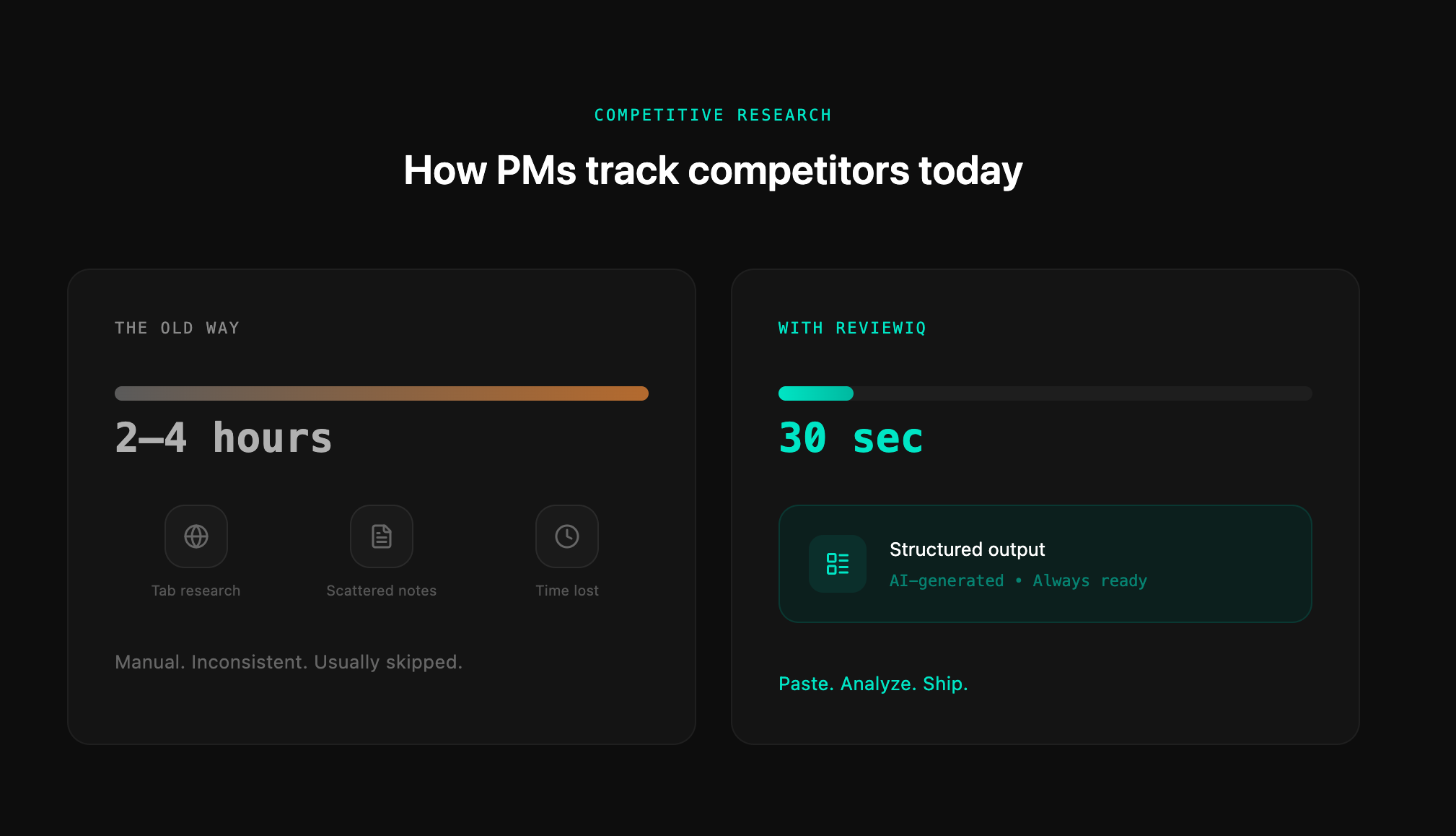
The signal is already out there. Thousands of users are openly complaining about your competitors on G2, Reddit, the App Store. But nobody has time to read all of it, synthesize it, and turn it into something useful for a roadmap conversation. The result? Junior PMs skip it entirely. Senior PMs do a rushed version under time pressure. Everyone is making product decisions with incomplete competitive context.
"Competitive research typically takes 2–4 hours per competitor. It's inconsistent, skewed by recency bias, and rarely documented in any shareable format."
THE USER
I built it for the PM who keeps meaning to do this and never quite finds the time
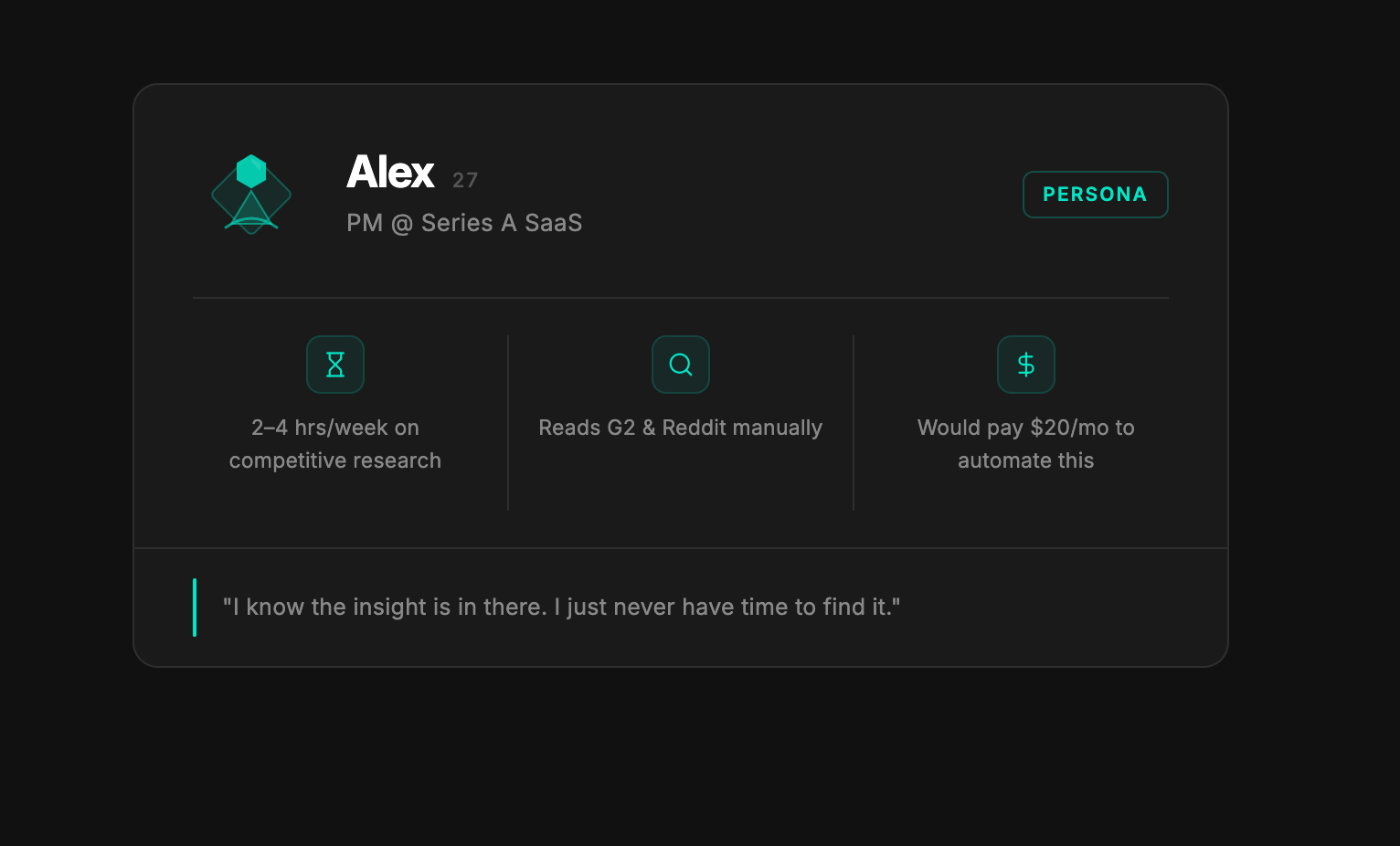
I wasn't designing for everyone. I was designing for one person: the PM at a 40-person SaaS startup who knows competitive research matters but keeps deprioritizing it because it takes half a day.
PRIMARY
- PMs at Series A–C SaaS startups
- Indie hackers validating positioning pre-launch
SECONDARY
- UX researchers synthesizing qualitative feedback
- Early-stage investors doing light due diligence
THE DECISION
I had three real options, and most of the work was ruling two of them out
Before building anything, I mapped out the real choices.
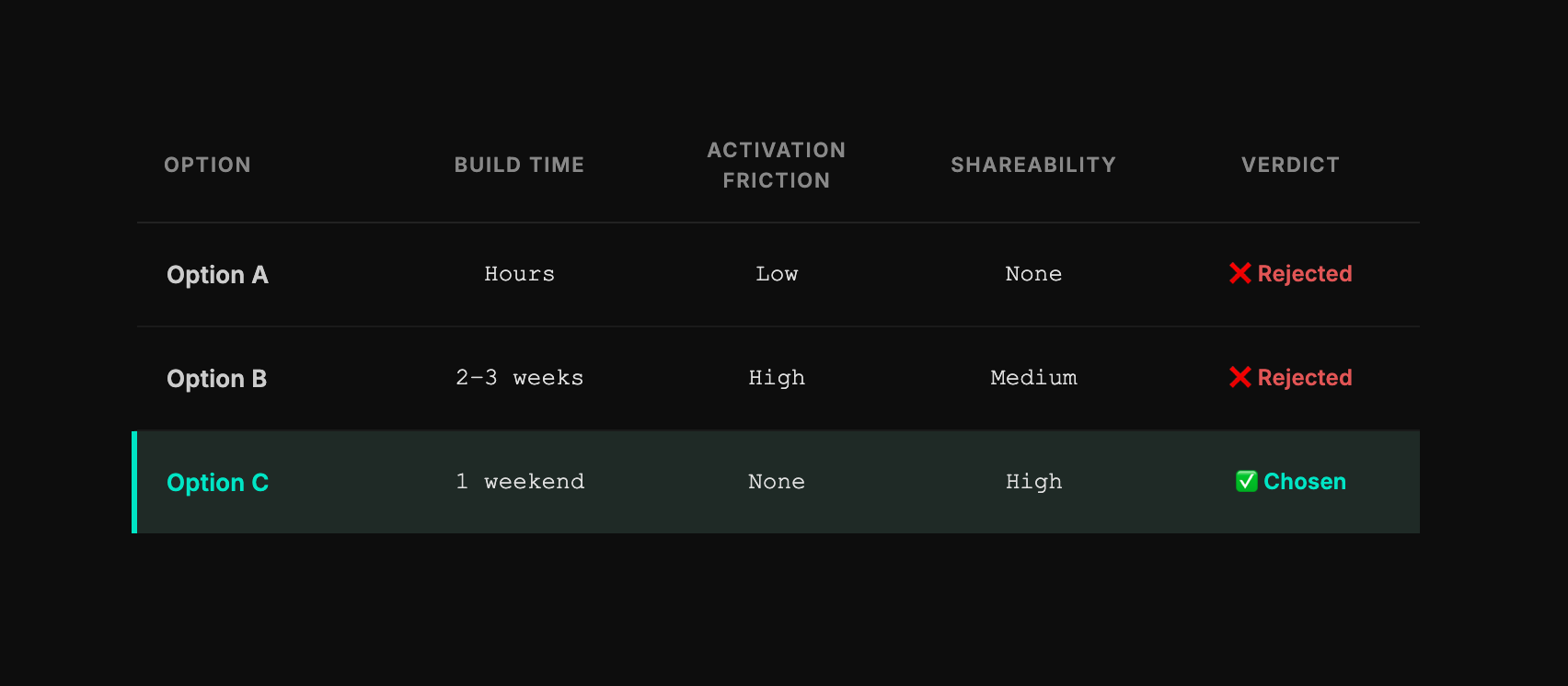
CHOSEN: Option C - Lightweight web tool with shareable output.
Paste reviews → structured card → shareable URL. No login. No scraping. One engineer, one weekend.
THE PRODUCT
It does four things. I talked myself out of everything else.
Everything had to pass one test: does it get you from paste to insight in under 30 seconds?
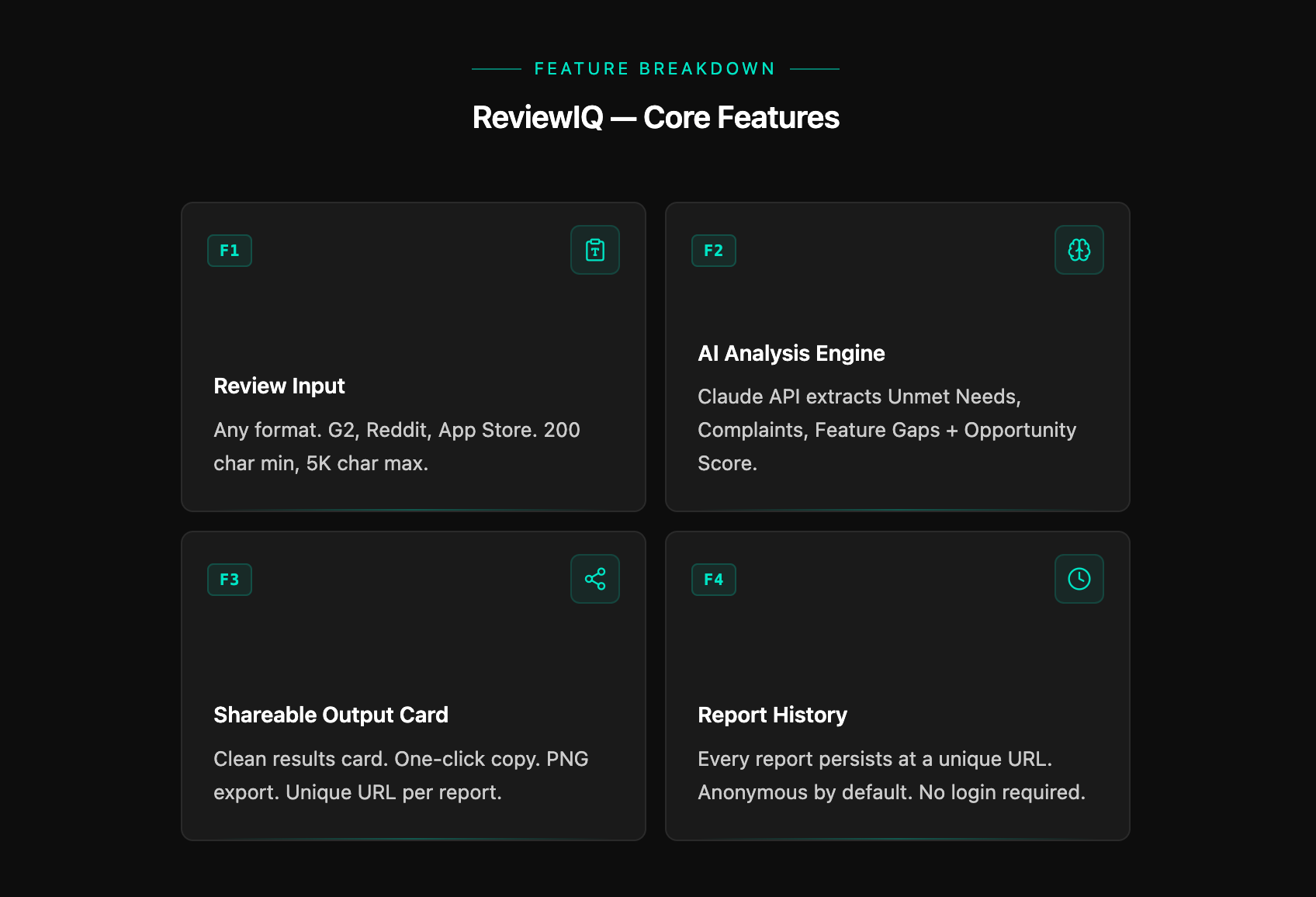
- F1
Review Input
Any format. G2, Reddit, App Store. 200 char min, 5K char max.
- F2
AI Analysis Engine
Claude API extracts Unmet Needs, Complaints, Feature Gaps, and Opportunity Score (1–10).
- F3
Shareable Output Card
Clean results card. One-click copy. PNG export for LinkedIn and Slack. Unique URL per report.
- F4
Report History
Every report persists anonymously at a unique URL. No login required.
TRADEOFFS
None of these came for free, and I knew it going in
MANUAL INPUT VS AUTO-SCRAPING
Manual paste adds friction - but eliminated weeks of scraper engineering, ToS risk, and rate-limiting complexity. The real test was whether the AI output was valuable enough that people would endure the paste step. They did.
ANONYMOUS SESSIONS VS USER ACCOUNTS
Removed the biggest conversion killer on day one. The v1 goal was usage, not retention. Unique URLs gave users enough to work with.
5K CHARACTER CAP
Controlled API costs, kept analysis under 10 seconds. Chunking for larger inputs scoped to v2, documented in the PRD.
SPEED VS POLISH
Shipped in one weekend using Lovable components. The value proposition was the AI output, not the interface. Polish is a v2 priority.
IMPACT
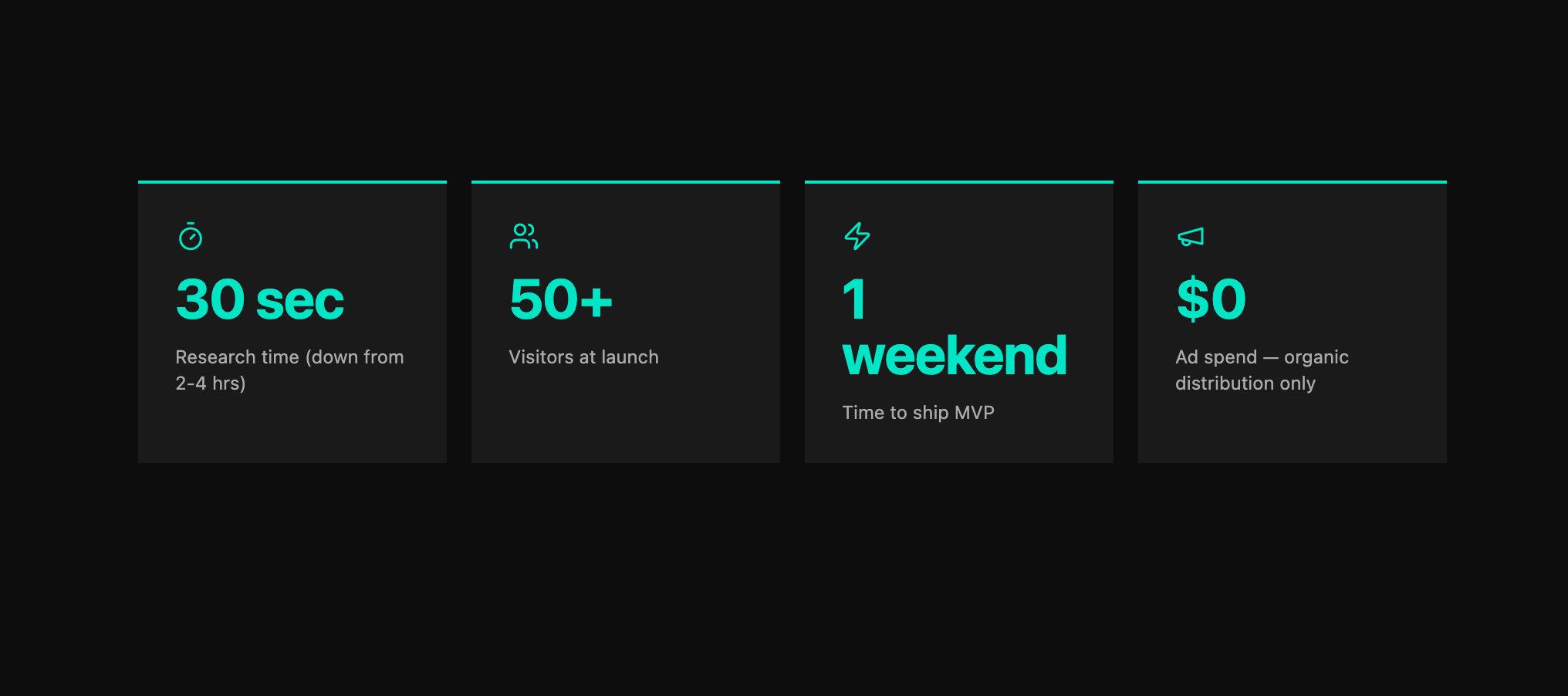
I wasn't sure anyone would use it. They did.
LEARNINGS
A few things I'm taking into the next build
Writing the PRD first saved me from myself.
I wrote a full spec before touching any code. When tradeoffs came up during the build, I already knew what the product was trying to do. The decisions were fast.
The one-weekend limit did me a favor.
One weekend forced brutal prioritization. I had to identify the single thing that had to be true for the product to work. For ReviewIQ, that was: does the AI output feel genuinely useful? Everything else was negotiable.
The share image turned into the whole growth engine.
The PNG export became the main distribution channel. People shared ReviewIQ output cards on LinkedIn and that drove traffic. Build for shareability from day one.
Thanks for reading. If you've ever lost a Friday afternoon to G2, this one was for you.